Boost Sales with Email Marketing in Affiliate Marketing
Did you know that for every dollar spent on email marketing, the average return on investment (ROI) isbetween $36 and $42? This shows how powerful email marketing can be, especially in affiliate marketing. Many marketers overlook email marketing, even though it’s very profitable. By adding emails to your affiliate marketing plan, you can make a lot of money.
We aim to share email marketing tips for affiliates with you. Using emails lets you talk directly to your audience with special content. This can help you sell more by guiding people to buy. It also brings more visitors to your site and boosts your earnings.
Key Takeaways:
- Email marketing can yield an impressive ROI between $36 and $42 for every $1 spent.
- Effective email marketing hinges on direct communication with your audience through personalized content.
- Integrating emails into your affiliate marketing strategy can substantially boost sales and revenue.
- Curated email content enhances site traffic and conversion rates.
- Underutilizing email marketing means missing out on a highly profitable revenue stream.
Understanding Email Marketing in Affiliate Marketing
Email marketing in affiliate marketing is a powerful strategy. It promotes products and earns commissions through targeted emails. Marketers send offers directly to subscribers’ inboxes, driving sales effectively.
What is Email Marketing?
Email marketing sends commercial messages to groups via email. In affiliate marketing tactics, it aims to drive conversions and earn commissions. It can earn between $36 and $42 for every $1 spent, showing its potential. According to multiple industry sources in 2025, email marketing continues to deliver one of the highest ROIs among all digital marketing channels.
The Role of Email Marketing in Affiliate Programs
Email marketing is key in affiliate programs, offering a direct way to reach potential customers. Personalized and segmented campaigns build trust and boost conversions. Research from 2025 shows that segmented email campaigns drive 30% more opens and 50% more click-throughs compared to non-segmented campaigns.
Studies indicate that segmentation can increase click-through rates by up to 100.95%. This targeted approach strengthens the marketer-audience bond, fostering loyalty and driving sales.
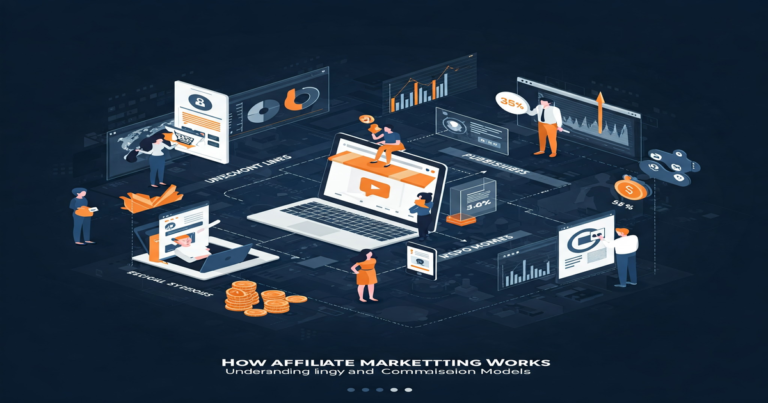
How Affiliate Email Campaigns Work
Affiliate email campaigns send promotional emails with affiliate links to promote products or services. These emails have engaging content and clear calls-to-action. They encourage recipients to click on the affiliate link and buy.
The success of these campaigns is measurable through trackable links. Visitors spend less than 15 seconds on websites, making quick engagement crucial. Emails with personalized subject lines can increase open rates by 22% to 50%, depending on the type and level of personalization used.
By using email marketing in affiliate programs, marketers can diversify their income. Starting with five affiliate programs is recommended to optimize revenue sources. This strategy ensures multiple chances to earn affiliate income, making email marketing essential for financial success.
Benefits of Using Email Marketing for Affiliate Marketers
Email marketing is a powerful tool for affiliate marketers. It helps increase conversion rates and keeps the audience engaged. Let’s explore the main advantages that make email marketing crucial for affiliate success.
High ROI of Email Marketing
Email marketing has a high return on investment (ROI). It outshines other channels like social media and search ads because it targets the right people. By dividing subscribers based on who they are and what they do, marketers can boost their conversion rates.
Email campaigns can also get better over time. This is because they can be tweaked based on how well they perform. This means affiliates can get more out of their efforts without spending too much.
Direct Communication with Your Audience
Email marketing lets affiliates talk directly to their audience. This builds stronger relationships and boosts brand awareness. It also helps establish trust and credibility.
Personal touches, like using names and sending content that matches what people are interested in, improve engagement. This direct line ensures affiliates can send messages that really connect with their audience. This leads to higher engagement and loyalty.
Trackable Performance Metrics
Email marketing also makes it easy to track how well campaigns are doing. Platforms give detailed stats on things like open rates and conversion rates. This lets affiliates see what’s working and what’s not4.
With this data, affiliates can keep making their campaigns better. This means they can get even better results over time. Having these insights helps make informed decisions and leads to long-term success in affiliate marketing.
The table below shows the potential earnings from different email marketing affiliate programs:
| Email Provider | Commission Structure |
|---|---|
| Kit (ConvertKit) | 30% recurring lifetime commission |
| GetResponse | $100 one-time commission or 33% recurring commission |
| Constant Contact | $5 per free trial registration, $105 per plan purchase |
| MailerLite | 30% lifetime recurring commission |
| Brevo | €5 per signup, €100 per new paying customer |
| Omnisend | 20% recurring commission |
How to Choose the Right Affiliate Products for Email Promotion
Choosing the right affiliate products for email promotion is key. We need to look at profitability, how well they fit our audience, and keep offers consistent. This way, we can boost our affiliate revenue through email marketing.
Evaluating Profitability
Checking if products are profitable is crucial. Web hosting affiliate programs, for example, can earn us $100+ per sale. This attracts top marketers. VPN affiliate programs, worth $50 billion, offer 40% – 100% commission per sale. These are great for making money.
Using high-ticket products can help meet our revenue goals. This can also increase our earnings.
Ensuring Relevance to Your Audience
It’s important that the products we promote match what our audience likes. For example, gym equipment is searched 163,000 times a month. This shows a big interest in fitness, making it a good choice for fitness-focused subscribers.
Services that offer a $36 to $42 return for every $1 spent are also interesting. This can grab the attention of those looking for effective marketing solutions. Asking our audience directly through polls and surveys can also help us find out what they want. This makes our products more relevant.
Maintaining Consistency in Offers
Being consistent in what we promote builds trust and keeps our audience engaged. Adding affiliate links naturally and sharing valuable content can boost engagement. Sharing our favorite products and why we like them keeps things real and builds trus.
Looking at past data can also help us pick better products. This way, we can see what our audience likes best.
Building and Growing Your Email List
Strong email list building for affiliates is key. It’s about getting and keeping subscribers. This means using smart strategies for both getting and keeping people on your list.
First, you need to get clear consent from new subscribers. This means having good opt-in forms that show what they’ll get. Tools like MailChimp help a lot with this. It’s free for up to 2,000 subscribers and 10,000 emails a month, perfect for beginners.
For more features, AWeber and GetResponse are good choices. They offer great deals and lots of features.
Once you have subscribers, keep them interested. Personalized emails are a big help. They make your emails feel special and more relevant. Segmenting your list also helps, as it lets you send targeted emails. This can lead to more sales and higher earnings.
Also, make sure your emails have clear calls to action. This helps people know what to do next. It’s a big part of making your affiliate program successful.
Skip repetitive and spammy emails to avoid disengagement. Consistent value-driven content helps maintain subscriber interest and prevents unsubscribes.
It’s also important to grow your list naturally. Things like lead magnets can really help. For example, one lead magnet got over 2,000 subscribers. This shows how powerful they can be.
So, make sure your content is engaging and run promotions to get more subscribers. This is key to growing your list.
Finally, keep interacting with your subscribers. Your email list is a direct way to reach potential customers. The value of a subscriber can be much higher than one sale. This is why building a good email list is so important for affiliate marketers.
| Service Provider | Free Plan | Starting Monthly Cost |
|---|---|---|
| MailChimp | Up to 2,000 subscribers / 10,000 emails | $11/month |
| AWeber | None | $19/month for 500 subscribers |
| GetResponse | None | $15/month for 1,000 subscribers |
Effective Email Automation in Affiliate Marketing
Email automation in Affiliate Marketing makes it more efficient and consistent. It uses email automation tools for affiliate marketing to streamline campaigns. This ensures our messages reach the right people at the best times.
The Importance of Email Sequences
Email sequences are key for affiliate promotions. They help build relationships and introduce products systematically. Automated sequences ensure new subscribers get a welcome series and regular content that builds trust and promotes products.
Cold email affiliate marketing can be tough but works with clear, honest messages about the product. Targeting customers with competitor products and using personalized templates can also help. Tools like GMass make cold email campaigns more effective.
Tools for Email Automation
Tools like GetResponse, ActiveCampaign, and Brevo are great for affiliate marketing. They offer features like visual workflow editors, automation, and CRMs. These tools help with segmentation, analytics, and tracking performance metrics like open rates and conversions.
In 2025, advanced automation platforms include Kit (ConvertKit), Moosend, and MailerLite, each offering unique advantages for affiliate marketers. Advanced tools automate content delivery, saving us time. They also track key metrics, helping us improve our strategies for better results.
| Platform | Unique Features | Pricing |
|---|---|---|
| GetResponse | Visual workflow editor, automation, built-in CRM | Varies by plan |
| ActiveCampaign | Advanced segmentation, in-depth analytics | Monthly subscriptions |
| Brevo (Sendinblue) | Cost-effective, free plan with full features | Free and paid plans |
| Moosend | Automation capabilities, visual workflow builder | Free to custom pricing |
| Kit (ConvertKit) | Creator-focused, simple automation, 30% affiliate commission | Free up to 1,000 subscribers |
Crafting Compelling Email Content for Affiliates
In affiliate marketing, making great email content is key. Good emails inform, persuade, and engage people. This leads to more opens, clicks, and sales. It’s important to mix useful info with promotions, use engaging templates, and personalize your emails.
Balancing Informative and Promotional Content
Finding the right mix of info and promotions is vital. You should share valuable stuff that meets your audience’s needs. But, adding promotions can gently nudge people to buy. For example, a newsletter might share tips and suggest an affiliate product.
Creating High-Converting Email Templates
Using top-notch email templates can really help your campaigns. There are many templates for affiliate marketing, each suited for different campaigns. For instance, there are templates for brand affiliates, onboarding, and blogger partnerships. Plus, follow-up emails can keep people interested.
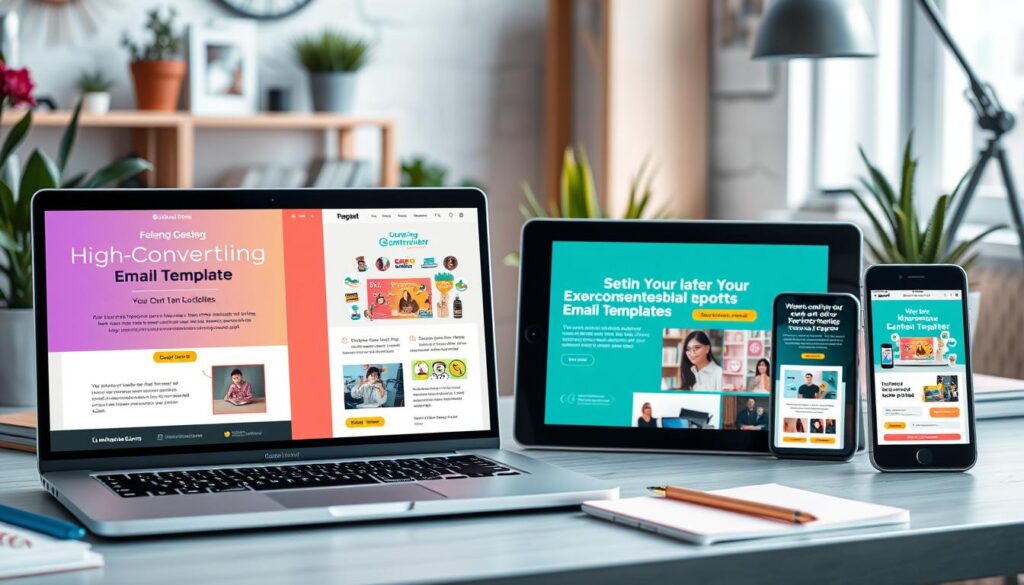
Affiliate programs like Mailercloud and AWeber offer 30% commission for referrals. GetResponse even offers up to 33%. Using these templates and matching them with these commissions can increase your earnings.
Using Personalized and Engaging Email Copy
Personalized emails in affiliate programs really boost engagement. Personal touches make emails feel more personal and relevant. Using names, referencing past interactions, and segmenting lists can greatly improve engagement.
| Template Type | Percentage Focus | Example Programs |
|---|---|---|
| Affiliate Marketing | 40% | MailerCloud, AWeber, GetResponse |
| Brand Affiliates | 20% | Kit (ConvertKit), SendinBlue |
| Affiliate Onboarding | 20% | AWeber, GetResponse |
| Blogger Partnerships | 20% | Kit (ConvertKit), SendinBlue |
Well-made emails are powerful because they mix different elements well. By using these strategies, affiliates can improve their marketing. This leads to more engagement and sales.
Segmentation for Higher Email Engagement
Using email segmentation can really boost your affiliate email engagement. By splitting your list into groups based on what they like and who they are, you can send emails that really speak to them. This makes them more likely to engage with your content.
Segmented emails experience 30% more opens and 50% more click-throughs than non-segmented campaigns, according to 2025 research. Personalized emails also contribute to 58% of sales and can increase transaction rates by up to 600%. These campaigns also help increase sales, making them key to successful email marketing for affiliates.
Segmenting your emails is very efficient. They have higher open and click-through rates, showing they work better than non-segmented emails. This targeted approach not only saves resources but also keeps customers happy by sending them content they care about.
There are many ways to segment your emails. For example, you can use demographics like age, gender, or location to send more relevant content. Segmenting by behavior, like what links people click, helps you understand what they’re interested in and send them the right messages.
Segmentation is also key for A/B testing and improving your emails. By dividing your audience, you can try out different emails to see which ones work best. This not only boosts engagement but also gives you valuable data for future campaigns.
Marketers who use segmented campaigns can see up to a 760% increase in revenue. This shows how big of a difference good segmentation can make. It makes your emails more relevant and effective, helping your affiliate marketing do better.
Tips for Successful Affiliate Email Campaigns
To make your affiliate email campaigns work, you need a few key strategies. First, use automated triggers for emails based on what users do. Keep your emails coming at the same time every week. Also, add social proof to make your emails more believable.
Setting Up Automated Triggers
Automated triggers are key in email campaigns. They send emails at the right time based on what users do. This makes your emails more relevant and engaging. It also helps you keep more subscribers interested.
Studies show that segmenting your email list can improve click-through rates.It can also increase click-through rates by up to 100.95%.
Maintaining a Consistent Email Schedule
Sending emails at the same time every week helps keep your subscribers interested. It makes them look forward to your emails. By always providing value, you keep your brand top of mind.
Tools like MailChimp, Drip, and AWeber make it easy to plan your email schedule. Using a lead magnet can also help grow your email list quickly.
Utilizing Social Proof to Build Trust
Adding social proof to your emails can make them more trustworthy. Use testimonials, user-generated content, and case studies to show success. This can encourage more people to buy.
Research from 2025 indicates that email newsletters are the third highest channel for distributing content, with a 71% rate of usage. Personalized subject lines can increase open rates by 22% to 50%.
By using automated triggers, a consistent schedule, and social proof, you can make your affiliate email campaigns more effective.
Measuring and Optimizing Email Performance
To boost email marketing ROI, we need a solid plan for tracking and analyzing our emails. By focusing on key metrics and using the right tools, we can make our emails more effective.
Key Metrics to Track
There are several important metrics to watch for in our email campaigns. The clickthrough rate (CTR) shows how well our emails grab attention, with 33% of marketers prioritizing it. The open rate, a top metric for 31% of marketers in 2025, tells us how good our subject lines are. Conversion rate shows how many people take the action we want, which is key to success.
Bounce rate, including both hard and soft bounces, shows how healthy our email list is. Other vital metrics include list growth rate, email sharing/forwarding rate, overall ROI, and unsubscribe rate.
Tools for Performance Analysis
Choosing the right tools for analyzing performance is crucial. Platforms like Mailchimp and HubSpot provide detailed analytics for tracking key metrics. Fast-loading emails and a reliable hosting provider are also key for smooth communication.
Using caching, CDNs, and optimizing for mobile ensures our emails are accessible and engaging. Load balancing helps by spreading incoming requests across multiple servers.
A/B Testing for Continuous Improvement
A/B testing is essential for improving our email campaigns. By trying out different subject lines, email copy, and calls to action, we find what works best. Personalized emails can bring up to 40% more revenue than generic ones, showing the value of customization.
Automated emails, making up 37% of all email marketing orders in 2025, generate 320% more revenue than non-automated emails], with high open and conversion rates. Regular A/B testing helps us refine our emails, leading to better affiliate conversion optimization and higher email marketing ROI.

Holiday Campaigns and Time-Sensitive Promotions
Holiday campaigns and time-sensitive promotions are key to boosting sales during busy seasons. Affiliate marketers can increase traffic and conversions by using these strategies.
Leveraging Holidays for Increased Sales
Using holidays for promotions can really help sales. In Quarter 4, many retailers make a big chunk of their yearly income. This makes it a prime time for sales.
High-value customers and new subscribers love seasonal deals. Personalized emails can make these offers even more effective.
Creating a Separate Holiday Campaign
Having a holiday campaign helps target specific customers better. Offers like free shipping or ‘Last chance’ can lead to quick sales.
Personalized offers for regulars and first-time subscribers boost engagement. Seasonal emojis and clear CTAs can also increase open and click rates.
Common Pitfalls to Avoid in Affiliate Email Marketing
Email marketing in affiliate marketing can be very effective. But, there are several common pitfalls to avoid. One major email marketing pitfall in affiliate marketing is promoting products that are not relevant or of low quality. This can harm your reputation and lead to fewer people engaging with your emails.
It’s crucial to choose products that your audience will find interesting and useful. This way, you can keep their trust and increase the chances of them making a purchase.
Another issue is over-promoting. It might seem like a good idea to promote many products to make more money. But, promoting too many products can confuse and overwhelm your audience. Instead, focus on a few products that you think will do well with your audience. Use A/B testing to find out which products work best.
Keeping your email list clean is also important. If you don’t, you might see low engagement and a lot of people unsubscribing. Regularly removing inactive subscribers can help improve how well your emails do. Also, sending emails at the wrong time can make them less visible and more likely to be ignored.
It’s also vital to follow email laws like the CAN-SPAM Act. Breaking these laws can lead to big fines, showing how important it is to follow them. Make sure your emails are checked for spelling mistakes to avoid being marked as spam, which can hurt how well your emails get delivered.
Being consistent in your content is also key. Using generic subject lines and not personalizing your emails can lower your open rates. Personalizing your emails can make your subscribers more engaged and loyal, which is crucial for best email practices for affiliate sales.
To summarize the main issues and best practices, here’s a table:
| Common Pitfall | Impact | Recommendation |
|---|---|---|
| Promoting Irrelevant Products | Damages Reputation | Select Audience-Relevant Products |
| Over-Promotion | Overwhelms Audience | Limit Product Promotions |
| Neglecting Email Hygiene | Low Engagement | Regularly Clean List |
| Improper Send Times | Reduced Visibility | Send at Optimal Times |
| Non-Compliance with Laws | Heavy Fines | Follow CAN-SPAM Act |
| Generic Content | Low Open Rates | Personalize Emails |
Conclusion
Email marketing is a powerful tool in affiliate marketing. It offers a high return on investment, often delivering between $36 and $42 for every dollar spent in 2025. Crafting emails with personalized content is key to building relationships and driving sales. This makes email marketing a lasting strategy for affiliate marketers.
To get the most out of our campaigns, we need to focus on segmentation. Emails should be tailored to match subscriber interests, behaviors, and demographics. This approach boosts engagement and improves campaign performance. Automation tools also help by scheduling emails at the best times and automating sequences.
Keeping an eye on metrics like open rates and click-through rates is crucial. It helps us fine-tune our strategies and reach our goals.
Our success in affiliate marketing depends on consistently providing value. Offering exclusive content like e-books and discount codes can attract subscribers. A/B testing keeps our strategy flexible and effective. By adapting and optimizing, we can thrive in the affiliate marketing world, driving sales and growth.
FAQ
1. What is email marketing in affiliate marketing?
Email marketing in affiliate marketing is a strategy where you promote affiliate products or services through targeted email campaigns sent to your subscriber list. You earn commissions when recipients click your affiliate links and make purchases.
2. How much can I earn with email marketing for affiliate products?
Email marketing offers one of the highest ROIs in digital marketing, with returns between $36 and $42 for every dollar spent. Your actual earnings depend on factors like your email list size, engagement rates, product selection, and commission structures.
3. Do I need a large email list to start affiliate marketing?
No, you can start with a small list. Quality matters more than quantity. Even a list of 500-1,000 engaged subscribers can generate income if you provide value and promote relevant products. Focus on growing your list organically with targeted subscribers.
4. Is email marketing still effective in 2025?
Absolutely. Email marketing remains one of the most effective marketing channels in 2025, with high ROI, direct communication benefits, and superior conversion rates compared to social media and other channels.
Getting Started
5. What do I need to start email marketing for affiliate products?
You’ll need:
- An email service provider (ESP) like MailChimp, GetResponse, or Kit (ConvertKit)
- A lead magnet to attract subscribers
- Opt-in forms on your website or landing pages
- Affiliate program memberships
- Valuable content to share with subscribers
6. Which email marketing platform is best for beginners?
For beginners, MailChimp offers a free plan for up to 2,000 subscribers and 10,000 emails per month. Other beginner-friendly options include MailerLite (free up to 1,000 subscribers) and Kit (ConvertKit) which is creator-focused.
7. How do I build my email list from scratch?
Start by:
- Creating a valuable lead magnet (ebook, checklist, template, or guide)
- Adding opt-in forms to your website
- Using landing pages for specific offers
- Promoting your lead magnet on social media
- Ensuring clear value proposition for subscribers
8. What is a lead magnet and why do I need one?
A lead magnet is a free resource you offer in exchange for someone’s email address. It’s essential because people need an incentive to subscribe. Successful lead magnets solve a specific problem for your target audience.
Strategy and Best Practices
9. How often should I send emails to my list?
Consistency matters more than frequency. Start with 1-2 emails per week and adjust based on engagement metrics. The key is maintaining a regular schedule so subscribers know when to expect your emails.
10. What should I write about in my affiliate emails?
Balance promotional and informative content:
- Educational content (80%): Tips, tutorials, industry news, case studies
- Promotional content (20%): Product recommendations, special offers, reviews
Focus on solving problems and providing value first, with affiliate promotions integrated naturally.
11. How do I avoid coming across as too salesy?
- Share personal experiences with products you genuinely use
- Focus on solving subscriber problems
- Provide honest reviews including pros and cons
- Use storytelling to make promotions more relatable
- Maintain the 80/20 rule (80% value, 20% promotion)
12. What is email segmentation and why is it important?
Email segmentation divides your list into smaller groups based on demographics, interests, behavior, or purchase history. Segmented campaigns see 30% more opens and 50% more click-throughs, making your marketing more effective and relevant.
13. How can I personalize my emails?
Personalization strategies include:
- Using subscriber names in subject lines and content
- Segmenting based on interests and behavior
- Sending birthday or anniversary emails
- Recommending products based on past interactions
- Tailoring content to subscriber demographics
Personalized subject lines can increase open rates by 22% to 50%.
14. What are email automation sequences?
Email automation sequences are pre-written series of emails triggered by specific actions (like signing up or clicking a link). Common sequences include welcome series, abandoned cart emails, and product launch campaigns.
15. What tools do I need for email automation?
Popular automation tools include:
- GetResponse (visual workflow editor, built-in CRM)
- ActiveCampaign (advanced segmentation, analytics)
- Brevo/Sendinblue (cost-effective with free plan)
- Moosend (automation with visual workflow builder)
- Kit/ConvertKit (creator-focused, simple automation)
Source Links
Email Marketing ROI Statistics 2025
- Litmus – State of Email Report 2025
- https://www.litmus.com/blog/infographic-the-roi-of-email-marketing
- Litmus, 2025
Email Marketing Statistics and Benchmarks
- Omnisend – Email Marketing Statistics 2025
- https://www.omnisend.com/blog/email-marketing-statistics/
- Omnisend, April 2025
Email Marketing ROI and Performance Data
- EmailMonday – Email Marketing ROI Statistics 2025
- https://www.emailmonday.com/email-marketing-roi-statistics/
- EmailMonday, January 2025
HubSpot Marketing Statistics 2025
- HubSpot – 2025 Marketing Statistics, Trends & Data
- https://www.hubspot.com/marketing-statistics
- HubSpot, 2025
Email Subject Line Statistics
- HubSpot Sales Blog – Email Subject Line Statistics 2025
- https://blog.hubspot.com/sales/subject-line-stats-open-rates-slideshare
- HubSpot, May 2025
Segmented Email Campaign Statistics
- Growth-onomics – Email Marketing Benchmarks 2025
- https://growth-onomics.com/email-marketing-benchmarks-2025-open-rates-ctrs/
- Growth-onomics, August 2025
Email Automation and Segmentation Data
- Mailmodo – Email Marketing Statistics 2025
- https://www.mailmodo.com/guides/email-marketing-statistics/
- Mailmodo, January 2025
Email Affiliate Programs Guide
- GetResponse – Best Email Marketing Affiliate Programs 2025
- https://www.getresponse.com/blog/best-email-marketing-affiliate-programs
- GetResponse, October 2025
ConvertKit and Email Tool Comparisons
- Authority Hacker – Email Marketing Affiliate Programs
- https://www.authorityhacker.com/email-marketing-affiliate-programs
- Authority Hacker, August 2024
Email Marketing Benchmarks by Industry
- Mailchimp – Email Marketing Benchmarks & Industry Statistics
- https://mailchimp.com/resources/email-marketing-benchmarks/
- Mailchimp, 2025
Automated Email Performance Statistics
- Landbase – Email Sequence Statistics 2025
- https://www.landbase.com/blog/email-sequence-statistics
- Landbase, September 2025
Email Personalization Impact Data
- Virfice – Email Marketing Statistics 2025
- https://www.virfice.com/email-marketing-statistics/
- Virfice, March 2025
Email Open Rate Statistics
- HubSpot Blog – Email Open Rates By Industry 2025
- https://blog.hubspot.com/sales/average-email-open-rate-benchmark
- HubSpot, April 2025
Comprehensive Email Marketing Data
- Inboxally – Email Marketing Statistics 2025
- https://www.inboxally.com/blog/the-most-important-email-marketing-statistics
- Inboxally, July 2025
Email Campaign Best Practices
- WebFX – Email Marketing Benchmarks 2025
- https://www.webfx.com/blog/marketing/email-marketing-benchmarks/
- WebFX, 2025