The Affiliate Marketing Ecosystem: Understanding the Roles of Merchants, Affiliates, and Networks
Affiliate marketing has changed the game for businesses of all sizes. But what is the affiliate marketing ecosystem, and how do its key players work together? Are you ready to uncover the secrets behind this powerful performance-based model?
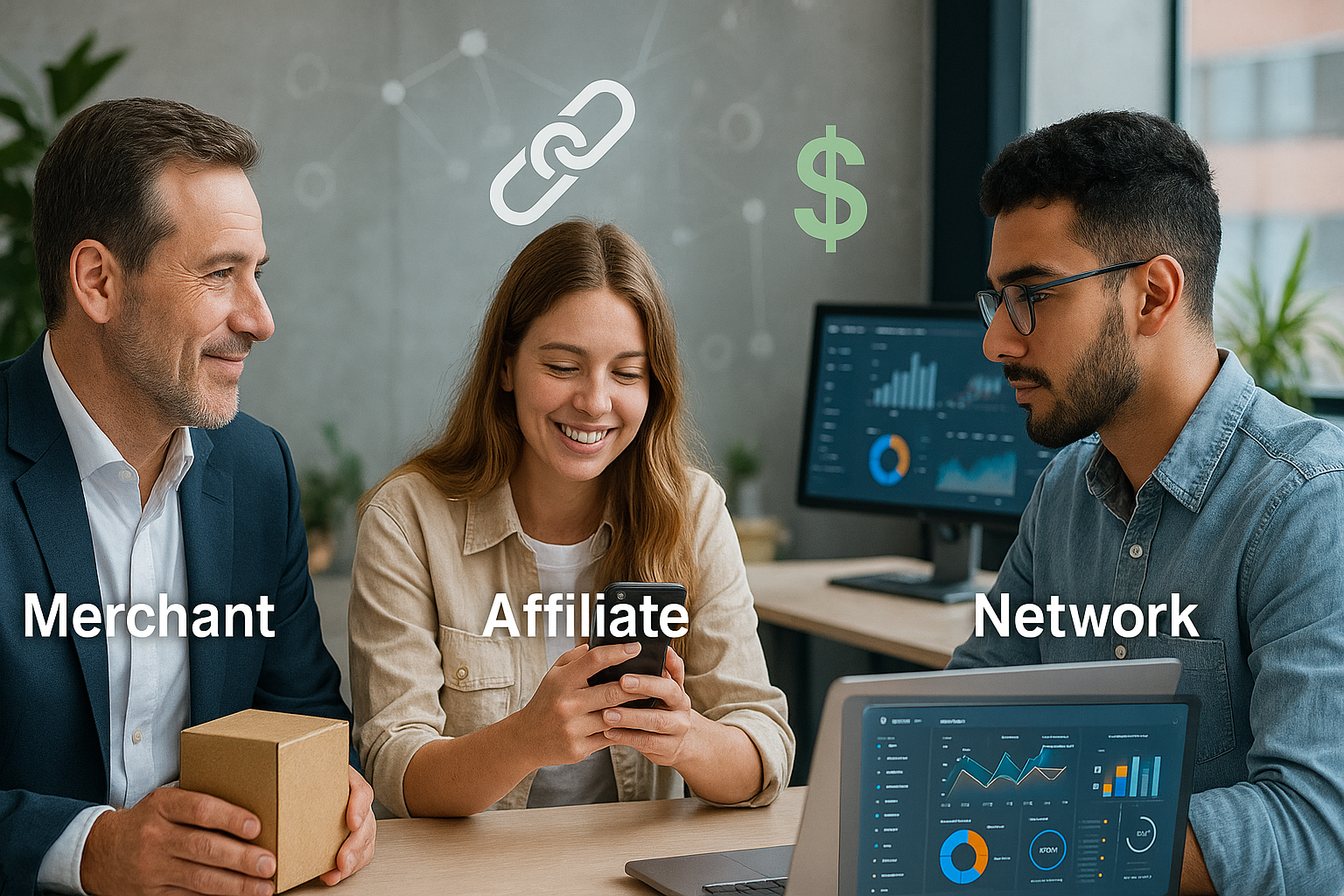
Affiliate marketing is a team effort. Merchants, or brands, create programs to encourage affiliates, or publishers, to promote their products or services. These affiliates use their platforms, like websites or social media, to drive traffic and sales for the merchants. At the heart of this system is the affiliate network. It connects merchants and affiliates, offering tools and tracking to help them work together.
While this article explores the various participants in the affiliate ecosystem, those new to the industry may benefit from first exploring the fundamental concept of affiliate marketing and why it has become such a vital component of online business strategies.
Key Takeaways:
- Affiliate marketing is a performance-based digital marketing strategy involving merchants, affiliates, and networks.
- Merchants create affiliate programs to incentivize affiliates for driving traffic or conversions.
- Affiliates promote products or services on their platforms, earning commissions for completed actions.
- Affiliate networks act as intermediaries, providing platforms for merchants and affiliates to collaborate.
- The affiliate marketing ecosystem has seen significant growth, with spending reaching an estimated $17-20 billion globally in 2025, more than doubling from previous projections
Demystifying Affiliate Marketing Fundamentals
Affiliate marketing is a way for businesses to reward people for promoting their products. It’s based on earning money through sales or leads. Since Amazon started its Associates Program in the late 1990s, it has grown a lot. Now, it’s a big part of how companies promote their products.
Performance-Based Marketing Explained
At its heart, affiliate marketing is about earning money based on performance. Businesses team up with people who promote their products. These promoters get paid for every sale or lead they bring in.
Key Components of Affiliate Marketing
The world of affiliate marketing includes merchants, affiliates, and networks. Merchants sell products, affiliates promote them, and networks help connect them. Companies like Rakuten Advertising and ClickBank make it easier for everyone to work together.
Historical Evolution of Affiliate Marketing
Affiliate marketing has changed a lot since it started. Amazon’s Associates Program was a big beginning. Now, it’s a big way for businesses to reach more people and make money.
| Key Affiliate Marketing Statistics | Percentage |
|---|---|
| Affiliates who utilize Rakuten Advertising, Impact, and ClickBank | 17% |
| Affiliates who work with platforms like ShareASale, CJ Affiliate, and Rakuten Advertising | 13% |
| Successful affiliates who recommend choosing a niche aligned with interests and expertise | 23% |
| Successful affiliates who suggest selecting niches with high-paying offers and evergreen verticals | 19% |
| Successful affiliates who align the selected niche with the audience’s interests | 22% |
| Affiliate marketers who emphasize promoting high-quality products that align with the audience’s needs | 24% |
| Affiliates who suggest looking for programs with attractive commissions and recurring payments | 26% |
| Successful affiliates who focus on content diversification, including tutorials, reviews, and case studies | 32% |
| Affiliate marketers who recommend optimizing content for search engines | 33% |
| Affiliates who utilize social media platforms and email marketing for promoting affiliate products | 31% |
| Affiliate marketers who leverage paid advertising to boost visibility and maximize ROI | 40% |
| Successful affiliate marketers who emphasize the importance of creating valuable content | 42% |
| Affiliate marketers who focus on building trust through transparency and value-driven content | 44% |
Affiliate marketing has grown a lot over the years4. It’s a way for businesses to make money and for people to earn income. By understanding how it works, everyone can find new ways to succeed.
The Affiliate Marketing Ecosystem
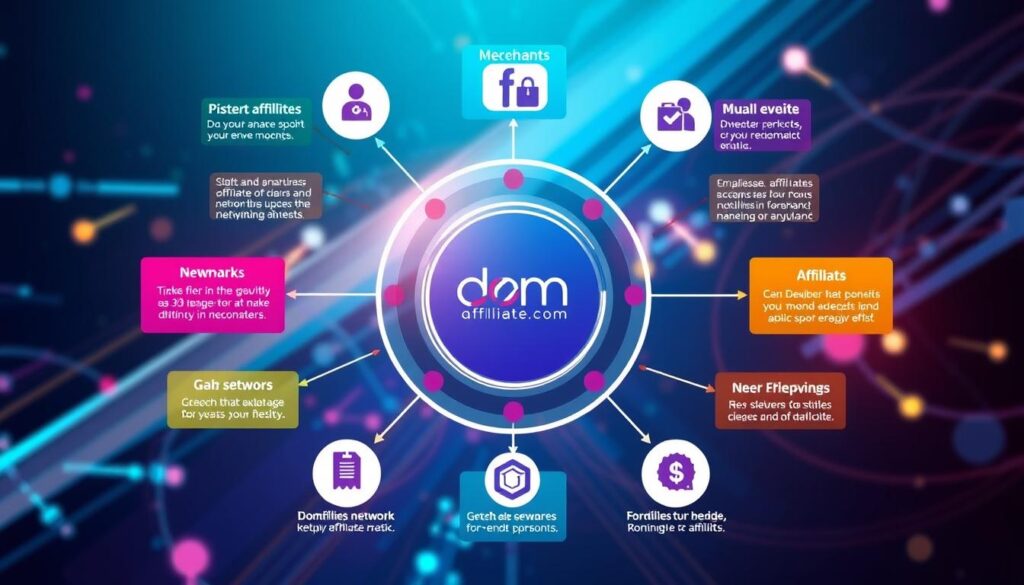
The affiliate marketing world is a complex network of merchants, affiliates, networks, and customers. Merchants offer products or services and create affiliate programs to encourage promotion. Affiliates use blogs, social media, and email to share these products with their followers. Affiliate networks help connect merchants and affiliates, offering tracking and payment services.
At the center is the customer, who sees affiliate content and might buy something. This system works best when everyone trusts and benefits from each other. New tech like AI and blockchain is making things better by using data for better offers. The future of affiliate marketing will focus on making things more personal for a better customer experience.
- Merchants provide products or services and set up affiliate programs.
- Affiliates promote these offerings through various channels like blogs, social media, and email marketing.
- Affiliate networks facilitate connections between merchants and affiliates, providing tracking and payment services.
- Customers interact with affiliate content, potentially making purchases that generate commissions.
6Amazon Associates is a huge affiliate program, with thousands of affiliates earning up to 10 percent on sales6. Businesses offer many rewards, like commissions, free products, and training6.
This ecosystem needs trust, openness, and mutual gain. Understanding the roles and strategies is key to success in affiliate marketing.
Core Players in the Affiliate Marketing Landscape
The affiliate marketing world is full of three main players: merchants, affiliates, and network intermediaries7. Each one plays a key role in making affiliate marketing successful.
Understanding Merchant Roles
Merchants, or advertisers, create affiliate programs for their products or services7. They give affiliates the tools they need, like banners and links, to help sell their products7. Merchants also set the rules for how much affiliates get paid and how they track success.
Affiliate Functions and Responsibilities
Affiliates, or publishers, promote merchants’ products on their own sites and social media7. Their main job is to bring in customers and sales for the merchants. Sites that offer cashback and loyalty programs are the biggest earners in affiliate marketing, making up 60-80% of the revenue.
Network Intermediaries
Networks like ShareASale, CJ Affiliate, and ClickBank connect merchants with affiliates7. They provide the tools and services needed for a smooth partnership. They also help make it easier for affiliates to earn money without losing their independence.
Knowing the roles of each player in affiliate marketing helps businesses use this model to grow and reach more people7.
Merchant Strategies and Program Management
Merchants can greatly benefit from effective merchant affiliate strategies and affiliate program management. These strategies help businesses use affiliate marketing to grow. By choosing the right affiliates and improving their programs, merchants can reach more people, show off their brand, and sell more.
Choosing the right affiliates is key. Look at their relevance, traffic, and reputation. Building strong relationships with top affiliates can really boost your sales and customers. Offer good commissions, engaging materials, and detailed tracking tools to help them succeed.
Good programs use discounts, multi-tiered commissions, and contests to keep affiliates motivated9. Keep an eye on your program and make changes as needed. This ensures you’re getting the most from your partnerships.
Companies like Amazon Associates and Wayfair show how well-planned merchant affiliate strategies and affiliate program management work. They’ve used their networks to find new customers, increase sales, and grow their brand.
Effective merchant affiliate strategies and affiliate program management are crucial for businesses. By picking the right affiliates, giving them the right tools, and always improving, merchants can find new ways to grow and make money.
Revenue Models and Commission Structures
Affiliate marketing programs have different ways to pay affiliates for their work. SaaS companies usually stop paying affiliates after a year. They pay for both the first sale and ongoing payments, but only for a limited time.
Commission Types and Calculations
There are several ways to pay affiliates, like pay-per-sale (PPS), pay-per-click (PPC), and more. PPS pays for each sale, as a percentage or a fixed amount. PPC pays for website visits, helping with brand visibility.
PPL rewards affiliates for leads, great for SaaS companies. PPI pays for software or app installations. Tiered programs have a multi-level structure, where affiliates earn from their sales and those of their recruits.
Payment Terms and Thresholds
Payment terms and thresholds vary by network and program. Some pay monthly, others only when a minimum is reached. Commissions are tracked through unique links or codes.
Performance Metrics and ROI
Merchants watch metrics like conversion rates and ROI to improve their programs. Percentage-based commissions match affiliate goals with product success. Residual commissions give ongoing income from customer payments.
Tiered structures offer higher rates for better performance, motivating affiliates.
Understanding revenue models and commission structures helps merchants create effective programs. This encourages affiliates to drive sales, helping businesses grow and profit.
Affiliate Marketing Tools and Technologies
In the fast-paced world of affiliate marketing, new tools and technologies are changing the game. They help affiliates and merchants work better, perform better, and run successful campaigns. These cutting-edge solutions give them a competitive edge.
Key tools include affiliate link trackers, analytics platforms, and content management systems. Platforms like TUNE, CAKE, and HasOffers offer advanced tracking and reporting. This lets affiliates check important metrics and improve their strategies.
Affiliates also use content creation tools, SEO software, and email marketing solutions. New technologies like AI and machine learning are being added. They help automate tasks, make content more personal, and boost campaign results4.
| Affiliate Marketing Platform | Pricing |
|---|---|
| Shopify Collabs | Available for free to install for Shopify merchants on Shopify, Advanced, or Shopify Plus plans with a 2.9% commission processing fee for automatic payments. |
| Affiliatly | Starts at £12 per month (approximately $15 USD) 2025, including a 90-day trial |
| Everflow | Pricing requires requesting a quote. |
| Refersion | Pricing starts from €89 per month (approximately $99 USD) in 2025, with a free 14-day trial available |
| Tapfiliate | Pricing starts from €79 per month (approximately $89 USD) in 2025 with a free 14-day trial |
| Post Affiliate Pro | Pricing starts from €115 per month (approximately $129 USD) in 2025 with a free trial available |
| LeadDyno | Pricing starts from €44 per month (approximately $49 USD) in 2025 with a free 30-day trial available |
As affiliate marketing keeps changing, it’s key to keep up with the latest tools and technologies. Merchants and affiliates can improve their work, track better, and get more from their efforts.

There are many specialized platforms and services in affiliate marketing. For example, Refersion helps with ambassador, influencer, and affiliate marketing. It also connects to over 2,000 apps through Zapier.
Platforms like AdPlexity let affiliates check ad types and sources in over 75 countries. Email marketing tools like Mailchimp reach about 5.8 billion users worldwide in 2025
Other important tools include Google Analytics for detailed data, Unbounce for landing pages, and Ahrefs for SEO and keyword research.
The affiliate marketing world is always changing. The most successful will use the latest tools and technologies. They will work better, perform better, and get more from their efforts.
“The affiliate marketing industry is constantly innovating, and the best tools and platforms are essential for staying competitive and maximizing the potential of your campaigns.”
Whether you’re an experienced affiliate or a merchant starting a program, knowing about different tools and technologies is crucial. It’s key for growing and succeeding in the long term.
The affiliate marketing world is very competitive. The most successful use the right tools and technologies. They work better, perform better, and get more from their efforts. By staying informed and using the latest advancements, affiliates and merchants can succeed in performance-based marketing.
Building Successful Affiliate Partnerships
Creating successful affiliate partnerships is key to any affiliate marketing program’s success. It’s about building a relationship where both sides benefit. Merchants need to think about who they partner with, how they promote, and how they communicate.
Partnership Selection Criteria
When looking for affiliate partners, focus on those with an engaged audience that matches your target market. Affiliates who create high-quality content and promote well are very valuable. In B2B, where decisions take longer, affiliates who offer educational content do better.
Communication Strategies
Good communication builds trust and keeps partnerships strong. Merchants should give affiliates feedback, creative assets, and support. They should also listen to their partners’ ideas. Setting clear goals is essential for a successful affiliate program.
Conflict Resolution
Conflicts can happen, like commission disputes or policy issues. Having clear ways to solve these problems is important. Being open and working together helps fix issues and keeps the partnership strong17.
By focusing on the right audience, good communication, and solving problems, merchants can grow their affiliate network. This network helps increase brand awareness and drives growth171819.
| Key KPIs for B2B Affiliate Partnerships | Importance |
|---|---|
| Conversion Rate | Tracks affiliate performance and identifies top-performing partners |
| Revenue | Measures the total revenue generated from the affiliate program |
| ROI/ROAS | Crucial for understanding the profitability of the affiliate program |
| Overall Engagement | Indicates the effectiveness of investing further in the affiliate program |
| Active/Inactive Affiliates | Helps identify and maintain a healthy, high-performing affiliate network |
“Affiliate marketing is a dynamic channel that rewards innovation and persistence.”
Successful affiliate partnerships are built on trust, openness, and a focus on results. By choosing the right partners, communicating well, and solving problems, merchants can build a strong affiliate ecosystem. This ecosystem drives growth and increases brand awareness over time.
Traffic Generation and Conversion Optimization
In the fast-paced world of affiliate marketing, knowing how to generate traffic and optimize conversions is crucial. Using a mix of strategies like content marketing, SEO, social media, and paid ads can help drive targeted traffic to affiliate offers.
Content marketing is a powerful tool. Affiliates create valuable content that speaks to their audience. This builds trust and helps generate leads. SEO also plays a key role, making content easier to find and reach the right people.
Social media is essential for affiliate marketing. It lets affiliates connect with their audience, share content, and promote offers. Using the right strategies for each platform can engage the audience effectively.
Conversion optimization is also key to success. Techniques like A/B testing and landing page optimization can increase the number of visitors who take action.
Successful affiliate marketers, like Pat Flynn and Michelle Schroeder-Gardner, show the potential of affiliate marketing. They’ve made significant income from it.
By focusing on traffic generation and conversion optimization, affiliates can build a profitable business. This growth benefits both the affiliates and the merchants they work with.
Affiliate marketing offers scalability and rapid growth. High-quality marketing materials are crucial for success. Building trust with the audience is essential.
“Affiliate marketing is a game-changer for businesses and individuals alike, offering a cost-effective way to drive traffic, generate leads, and boost sales. The key is to master the art of traffic generation and conversion optimization.”
| Affiliate Marketing Strategies | Key Advantages |
|---|---|
| Content Marketing | Builds trust, attracts targeted traffic, and generates leads. |
| Search Engine Optimization (SEO) | Enhances the discoverability of affiliate content and offers. |
| Social Media Promotion | Connects with the target audience, shares content, and promotes offers. |
| Conversion Rate Optimization (CRO) | Improves the percentage of visitors taking desired actions. |
By combining these strategies, affiliates can maximize the potential of affiliate marketing. This leads to sustainable growth for their businesses.
Affiliate Network Selection and Integration
Choosing the right affiliate network is key to your program’s success. Top networks like ShareASale, CJ Affiliate, and ClickBank have many features to help both merchants and affiliates succeed.
Network Comparison Criteria
Merchants should look at commission rates, payment terms, and the number of merchants available. They should also check the network’s reputation, support quality, and global reach. These factors ensure a smooth integration and a successful partnership.
Integration Best Practices
Integrating with an affiliate marketing network needs careful planning. It’s important to set up API connections, test thoroughly, and track sales accurately. By doing this, merchants can get the most out of their partnerships and achieve their goals.
When picking a network, consider what each offers. CJ Affiliate is great for big businesses with its advanced tools. Awin is perfect for reaching global markets, especially for international growth. ShareASale is a good choice for smaller businesses starting out in affiliate marketing.
The right network choice depends on the merchant’s specific needs and goals. By comparing networks and following best practices, merchants can build strong, lasting partnerships. This leads to steady growth.
Legal Considerations and Compliance
In the world of affiliate marketing, knowing the law is key. Both merchants and affiliates must follow rules like the Federal Trade Commission’s (FTC) guidelines. They also need to comply with the General Data Protection Regulation (GDPR) for European users and the California Consumer Privacy Act (CCPA).
Affiliates must tell people about their ties to merchants to avoid scams. Merchants, on the other hand, must make sure their programs follow all rules.
Rules for specific areas like finance and healthcare are also vital. Not following them can lead to big fines, legal trouble, and harm to your reputation. It’s important to have strong compliance plans, check things often, and train affiliates well.
Keeping up with new laws and following best practices helps affiliate marketers succeed. Being compliant not only keeps you out of trouble but also sets you apart from others. It shows you care about honest online marketing.
Getting the law right and being proactive about following it is crucial for any affiliate marketing success.
Performance Tracking and Analytics
In the fast-paced world of affiliate marketing, tracking and analyzing performance is key. It helps us build strong partnerships and improve our strategies. By using important metrics and detailed reports, we learn a lot about how well our programs work.
Key Performance Indicators
KPIs are at the core of tracking performance. They give us clear, data-based views of our online marketing efforts. These include click-through rates, conversion rates, and more. Knowing these KPIs lets us find our best affiliates, improve our messages, and make smart choices to boost our results.
Reporting Tools and Dashboards
We use top-notch reporting tools and dashboards to make the most of our data. These tools give us instant insights into how our programs are doing. By watching a wide range of KPIs, we spot where we can get better, use our resources wisely, and get more from our marketing.
Getting insights from tracking and analytics is crucial for strong affiliate partnerships and growing our customer base. With these tools, we can confidently move through the affiliate marketing world. We keep improving our programs’ performance.
“Affiliate marketing has a high Return on Investment (ROI) and is a fast-growing marketing channel, leading to increased revenue and customer acquisition.”
Managing Affiliate Relationships
Keeping strong affiliate relationships is key for any affiliate program management to thrive. Good management means talking often, checking how they’re doing, and offering rewards. We should give our affiliates fresh materials, detailed product info, and new marketing ideas.
Creating a lively community among our affiliates helps them share, work together, and feel part of a team. Offering special deals or higher commissions can keep our best affiliates coming back.
Using tools like Affistash and PartnerStack makes managing affiliates easier, improves talks, and boosts sales. Also, using Loom for video messages makes our chats more personal and engaging, leading to better results.
By focusing on managing affiliate relationships, we build a loyal group of affiliates. They’re all in for our success and help our affiliate program management grow.

“Maintaining strong affiliate relationships is the foundation for a successful and sustainable affiliate program.”
Future Trends in Affiliate Marketing
The affiliate marketing world is changing fast. We’ll see new technologies and trends that will change the game. Social media influencers are gaining trust, especially among young people. Also, tracking environmental impact is becoming more important.
Emerging Technologies
Artificial intelligence (AI) is becoming a big deal in affiliate marketing. Gen AI is making things happen faster, says Tye DeGrange of Roundbarn Labs. Voice search is also changing how we market, as people start using voice commands more.
Blockchain is another tech that’s getting popular. It makes tracking and reporting more transparent and efficient. This helps fight fraud and builds trust among everyone involved.
Market Evolution Predictions
Influencer partnerships are on the rise. Brands want to work with people who have real influence on social media. This is because people trust these influencers more.
Mobile strategies are becoming more important. People are using their phones more for shopping and browsing. Affiliate marketing is also moving into new areas, like B2B.
Video content and social commerce are also big. Brands and affiliates need to keep up with these changes to stay relevant.
Keeping up with these trends is key for success in affiliate marketing.
| Emerging Technology | Impact on Affiliate Marketing |
|---|---|
| Artificial Intelligence (AI) | Enables personalized optimization and improved decision-making for affiliate campaigns. |
| Voice Search | Requires affiliate marketing strategies to adapt to voice-based consumer behavior. |
| Blockchain | Enhances transparency and efficiency in affiliate tracking and reporting, addressing fraud concerns. |
“The costs of affiliate paid placement are anticipated to remain high, as per projections shared by Tye DeGrange. There is an expectation that uncertainty in the affiliate marketing industry will persist, posing challenges to brands, publishers, and agencies, according to Michael McNerney.”
As affiliate marketing keeps changing, staying ahead is crucial. Businesses need to keep up with trends and use new tech to succeed.
Risk Management and Fraud Prevention
The affiliate marketing industry is booming, with billions of dollars in transactions each year. But, this growth has also brought more fraud risks. It’s vital for businesses to have strong fraud prevention and risk management in place.
To tackle these risks, setting up a detailed screening for affiliate partners is key. A good screening process helps stop fraud in its tracks. Using automated systems to check websites and traffic can make this process more efficient. This is important because affiliates can earn up to 30% of sales.
Keeping a close eye on affiliate activities is also crucial. This way, any issues or rule breaks can be caught early. Tools like IP tracking and browser fingerprinting help spot fraud. Machine learning can also help find patterns of fraud.
Having clear rules in contracts with affiliates is another must. These contracts should outline what’s not allowed and what happens if rules are broken. This is important because not following rules can harm a brand’s reputation and sales.
By using these strategies, businesses can keep their affiliate programs safe from fraud. These steps can cut fraud by up to 70%. Creating a secure affiliate environment is key to a lasting partnership between brands and affiliates.
| Risk Factor | Potential Impact | Recommended Mitigation Strategies |
|---|---|---|
| Click Fraud | Inflated commission payouts, decreased ROI | Implement advanced tracking systems, monitor affiliate activities |
| Cookie Stuffing | Unfair attribution of sales, lost revenue | Establish clear program policies, conduct regular audits |
| Trademark Bidding | Unauthorized use of brand name, reputation damage | Enforce trademark protection, collaborate with affiliate networks |
| Compliance Risks | Regulatory fines, legal issues, reputation damage | Educate affiliates on ethical practices, enforce strict policies |
Conclusion
The affiliate marketing world is full of chances for everyone involved. Merchants, affiliates, and networks can all grow together. To succeed, it’s key to know each role, use the right tools, and keep up with new trends.
By working well together, using smart strategies, and being honest, we can all do well. This helps the whole industry grow.
We’ve looked at what affiliate marketing is, who’s involved, and how to manage and grow partnerships. It’s a good deal for everyone. Businesses get more customers and visibility, and affiliates make money by sharing good stuff with their followers.
The field is always changing, with new ideas like influencer marketing and special-interest affiliates. We need to stay open to new chances in the affiliate marketing world.
By keeping up with the latest, improving our plans, and building honest partnerships, we can handle the challenges. This way, we help the affiliate marketing world keep growing and thriving.
FAQ
1. What is affiliate marketing?
Affiliate marketing is a performance-based digital strategy where affiliates (publishers, creators) promote a merchant’s products or services and earn commissions on every sale or action they generate.
2. Who are the main players in the affiliate ecosystem?
The core actors are merchants (advertisers), affiliates (publishers, influencers), affiliate networks, and sometimes software platforms that manage tracking, payments, and relationships.
3. What are the main benefits of affiliate marketing for businesses in 2025?
- Cost-controlled customer acquisition
- Fast expansion into new markets
- High ROI thanks to the pay-for-performance model
- Advanced tracking and analytics
4. What are the major trends in affiliate marketing for 2025?
AI and machine learning for better tracking and personalization, the emergence of new networks, and more flexible commission and payout structures.
5. How do I choose the best affiliate network?
Compare networks based on reputation, commission rates, cookie duration, support, program diversity, and quality of reporting tools.
6. Which affiliate marketing tools or software are essential in 2025?
Platforms like Refersion, Tapfiliate, Post Affiliate Pro, LeadDyno, and analytics tools like Google Analytics; Mailchimp is popular for email campaigns.
7. How do I prevent fraud in affiliate programs?
Use advanced tracking systems, regularly audit partners, and apply strict policies on compliance and transparency.
8. What is the average budget for affiliate software in 2025?
Pricing ranges from $0 (for free starter versions) to over $500/month for AI-powered, integrated enterprise solutions. Most businesses find value around the $49–$99/month level.
9. Which legal regulations do affiliates and merchants need to follow?
GDPR for European traffic, FTC guidelines in the US, and all relevant disclosure and data privacy laws in your operational region.
10. How can affiliates maximize their income?
Pick a niche that fits your expertise and audience, choose high-paying or evergreen programs, optimize for conversions, and diversify promotion channels (SEO, content marketing, social media).
Source Links
- https://affiliatestatistics.marketing – 66 Affiliate Marketing Statistics For 2025 (Trends & Insights)
- https://www.emarketer.com/content/affiliate-marketing-2025 – Affiliate Marketing 2025
- https://www.statista.com/statistics/693438/affiliate-marketing-spending/ – Affiliate marketing spend in the U.S. 2023-2028
- https://www.wix.com/blog/affiliate-marketing-statistics – Affiliate marketing statistics and facts for 2025
- https://www.hostinger.com/tutorials/best-affiliate-networks – 10 best affiliate networks for marketers in 2025
- https://thecmo.com/tools/best-affiliate-marketing-software/ – 30 Best Affiliate Marketing Software Reviewed for 2025
- https://www.postaffiliatepro.com/affiliate-marketing-software/ – Best Affiliate Marketing Software 2025
- https://www.hostinger.com/tutorials/affiliate-marketing-statistics – Affiliate Marketing Trends & Key Insights